IV therapy has become a popular way to boost hydration, replenish nutrients, and support overall wellness. Traditionally offered in clinics, IV therapy is now available at home, providing convenience and flexibility. Both options have unique benefits and considerations, making it important to understand their differences before choosing the right approach for your health needs.
What Is At-Home IV Therapy?
At-home IV therapy allows licensed healthcare professionals to administer IV fluids, vitamins, and nutrients in the comfort of your home. This service typically includes a mobile nurse or trained technician who sets up the IV, monitors the session, and ensures safety throughout the process.
Benefits of At-Home IV Therapy
- Convenience – receive treatment without leaving your home
- Comfort – relax in a familiar environment
- Flexible scheduling – appointments can often be arranged quickly
- Privacy – discreet wellness treatment without public exposure
- Ideal for individuals with mobility challenges or busy schedules
At-home IV therapy is increasingly popular among professionals, parents, and individuals who prefer the convenience of healthcare services delivered directly to their doorstep.
Drawbacks of At-Home IV Therapy
Cost – often higher than clinic visits due to travel and personalized service
Limited emergency support – though rare, complications may require hospital care
Availability – service depends on local providers and coverage areas
While at-home IV therapy is safe when administered by trained professionals, it is essential to choose a reputable provider to ensure proper hygiene and correct nutrient administration.
What Is Clinic-Based IV Therapy?
Clinic-based IV therapy involves visiting a wellness center, medical spa, or healthcare facility where IV treatments are administered. Clinics are equipped with medical equipment, emergency protocols, and trained staff, making them a reliable option for treatment.
Benefits of Clinic-Based IV Therapy
Access to medical equipment and emergency care
Lower cost compared to at-home services
Experienced staff with multiple treatment options
Ability to monitor multiple patients safely
Availability of comprehensive wellness programs
Clinics provide a controlled environment with standardized procedures, making them ideal for first-time patients or individuals requiring more complex IV blends.
Drawbacks of Clinic-Based IV Therapy
Requires travel – may be inconvenient for busy schedules or mobility issues
Fixed hours – appointments may be limited or require advance booking
Less privacy – shared spaces may be used for multiple patients
While clinics provide safety and reliability, some individuals may prefer the comfort and convenience of receiving therapy at home.
Key Differences Between At-Home and Clinic IV Therapy
| Feature | At-Home IV Therapy | Clinic IV Therapy |
| Convenience | High – delivered to your home | Moderate – requires travel |
| Comfort | Personalized and private | Standardized, shared environment |
| Cost | Usually higher | Generally lower |
| Safety | Safe with trained staff, limited emergency support | Safe with immediate access to medical equipment |
| Scheduling | Flexible, often short notice | Limited to clinic hours |
| Monitoring | Professional supervision | Professional supervision with full resources |
| Ideal For | Busy schedules, mobility challenges, privacy | First-time patients, complex treatments, cost-conscious individuals |
Which Option Is Right for You?
The choice between at-home IV therapy and clinic-based treatment depends on your priorities. At-home IV therapy offers maximum convenience, comfort, and flexibility but can be more expensive. Clinic visits are cost-effective, highly safe, and suitable for patients who prefer a controlled environment with immediate access to medical support.
Individuals with mild dehydration, fatigue, or general wellness needs may benefit from at-home therapy, while those requiring medical monitoring, emergency preparedness, or more complex nutrient blends may prefer clinics.
Safety Considerations
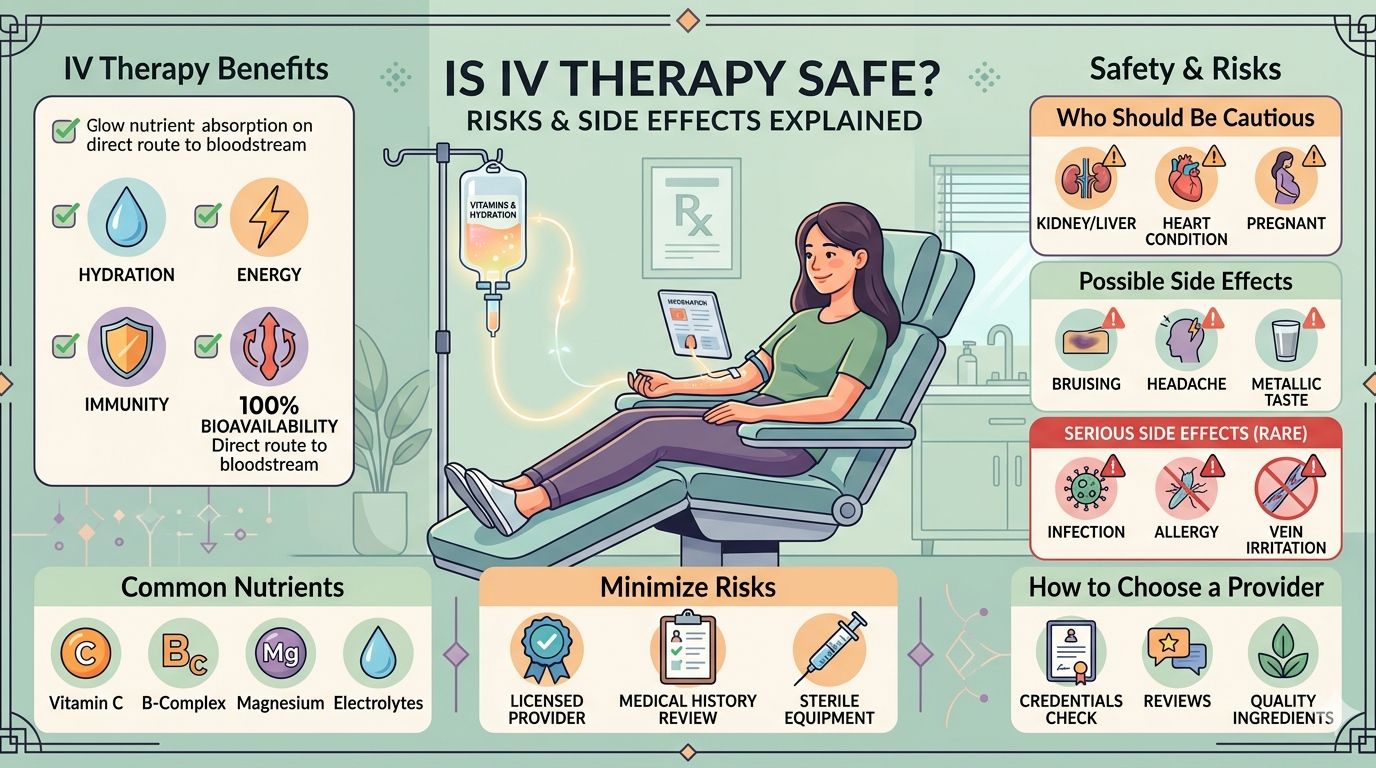
Both at-home and clinic IV therapy are safe when administered by licensed professionals. It’s essential to verify credentials, ensure proper hygiene practices, and discuss your health history with the provider. Patients with chronic conditions or medical complications should consult a healthcare professional before beginning any IV therapy.
Conclusion
At-home and clinic-based IV therapy each offer unique advantages. At-home therapy provides convenience, comfort, and flexibility, while clinics offer safety, affordability, and access to medical equipment. Understanding your wellness goals, budget, and health needs will help you determine the best option for rapid hydration, nutrient replenishment, and overall wellness.
Experience IV therapy conveniently at home or in clinic today
FAQs
Q1. Is at-home IV therapy as safe as clinic-based therapy?
Ans. Yes, when administered by trained, licensed professionals.
Q2. Which option is faster to schedule?
Ans. At-home IV therapy often offers more flexible and immediate scheduling.
Q3. Can I get the same nutrients at home as in a clinic?
Ans. Yes, most providers offer similar nutrient blends, though complex treatments may be more accessible in clinics.
Q4. Are at-home sessions more expensive?
Ans. Typically, yes, due to travel and personalized service.
Q5. Can clinics handle medical emergencies during IV therapy?
Ans. Yes, clinics are equipped with emergency protocols and equipment.
Q6. Is privacy better at home or in a clinic?
Ans. At-home therapy provides more privacy.
Q7. Can I choose the location for at-home therapy?
Ans. Yes, providers usually administer IVs in your home, office, or preferred location.
Q8. How long does an IV therapy session take?
Ans. Typically 30–60 minutes for both at-home and clinic sessions.
Q9. Are there risks to receiving IV therapy at home?
Ans. Risks are minimal with licensed professionals, but emergency support is limited compared to clinics.
Q10. Which is better for first-time IV therapy users?
Ans. Clinic visits are recommended for first-time users to ensure comfort and safety.