IV therapy has become a popular method for hydration, energy boosts, immune support, and overall wellness. While many people experience immediate benefits, it’s natural to wonder about its safety and potential side effects. Understanding how IV therapy works, who should consider it, and what precautions to take can help you make an informed decision.
How IV Therapy Works
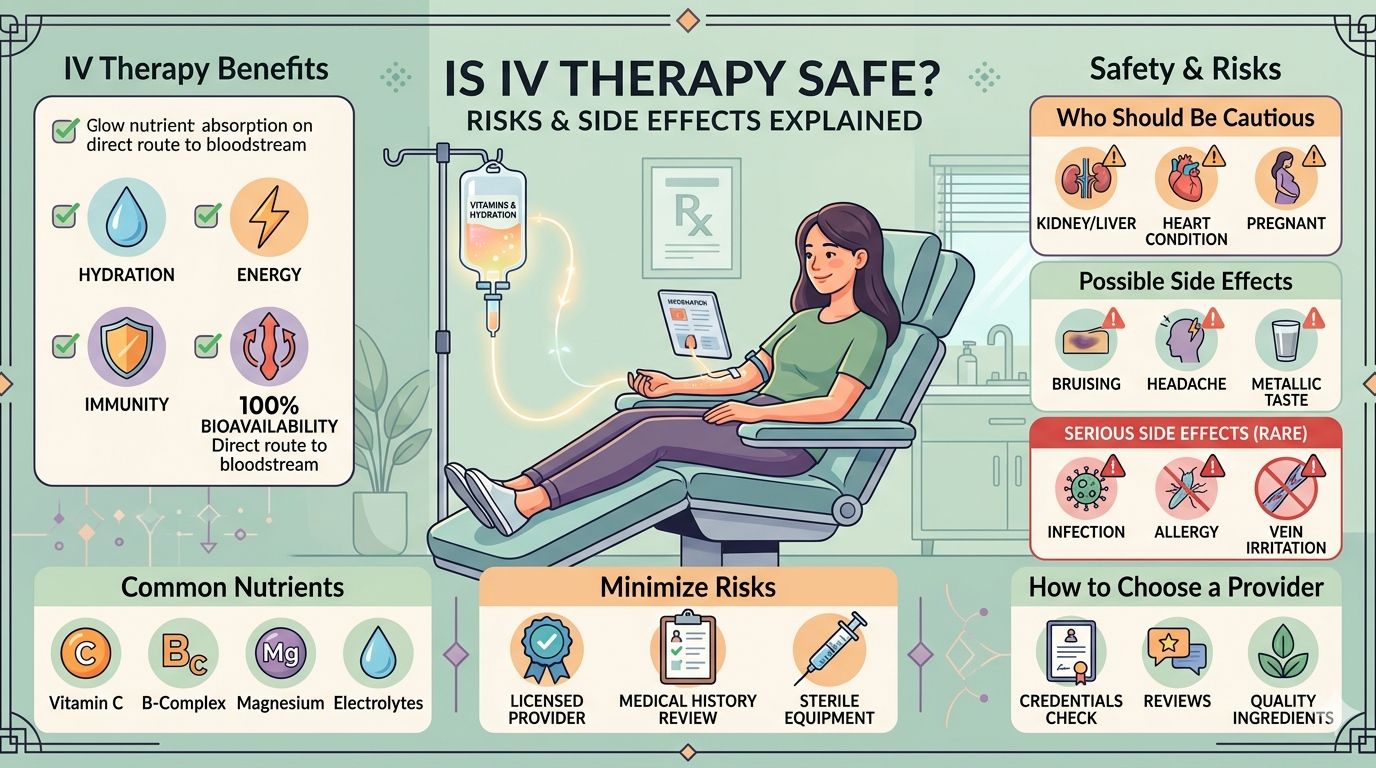
IV therapy involves delivering fluids, vitamins, minerals, and electrolytes directly into the bloodstream through a vein. Unlike oral supplements, which must be absorbed through the digestive system, IV therapy ensures 100% bioavailability of nutrients. This allows the body to quickly receive essential vitamins and minerals, making it a fast and efficient way to address dehydration, fatigue, or nutrient deficiencies.
Common nutrients included in IV drips include:
- Vitamin C – for immune support and antioxidant benefits
- B-complex vitamins – for energy and metabolism
- Magnesium – to reduce muscle cramps and promote relaxation
- Electrolytes – for hydration and recovery
Who Should Be Cautious
While IV therapy is generally safe for most healthy adults, certain individuals should exercise caution. These include:
- People with kidney or liver conditions, as excess minerals can cause complications
- Individuals with heart conditions or fluid restrictions
- Pregnant or breastfeeding women should consult their healthcare provider
- People with a history of vein or blood clot issues
Discussing your medical history with a licensed provider before treatment is essential to ensure safety and avoid complications.
Possible Side Effects
Most IV therapy sessions are well-tolerated, but mild side effects can occur. Common side effects include:
- Slight pain or bruising at the injection site
- Temporary warmth or cool sensation during the infusion
- Minor headache or dizziness in rare cases
- Nausea or a metallic taste, usually with high-dose vitamin C drips
Serious side effects are extremely rare when therapy is administered by trained professionals. However, complications like infections, allergic reactions, or vein irritation may occur if proper hygiene and protocols are not followed.
Tips to Minimize Risks
Choosing a licensed and experienced provider is the most effective way to minimize risks. Here are additional precautions:
- Verify that the provider follows sterile procedures and uses single-use equipment
- Discuss your medical history and current medications beforehand
- Start with a standard drip before progressing to higher-dose treatments
- Stay hydrated and avoid alcohol before your session
- Report any discomfort during or after the infusion immediately
Following these guidelines ensures a safe and effective IV therapy experience with minimal risk.
How to Identify a Reputable Provider
- Confirm the credentials of the healthcare professional administering the therapy
- Check for positive reviews and testimonials
- Ensure the clinic or mobile service uses quality, approved nutrients
- Ask about emergency protocols and safety measures
A trustworthy provider ensures that your IV therapy is administered safely, effectively, and comfortably.
Cost Considerations
IV therapy pricing varies depending on nutrient composition, session length, and whether treatment is at home or in a clinic. While cost should not be the only factor, understanding pricing helps you balance your wellness goals with budget considerations. Some clinics offer package deals for recurring sessions, which can provide savings over time.
Conclusion
IV therapy is generally safe when administered by licensed and trained professionals. Most side effects are mild and temporary, while serious complications are rare. Choosing a qualified provider, discussing your health history, and following recommended precautions ensures an effective and safe nutrient infusion experience.
Experience safe and effective IV therapy today
FAQs
Q1. Is IV therapy safe for everyone?
Ans. IV therapy is generally safe for healthy adults, but people with certain conditions should consult a provider first.
Q2. What are the most common side effects?
Ans. Minor bruising, temporary warmth, headache, or nausea may occur.
Q3. Can IV therapy cause infections?
Ans. Infections are rare when sterile procedures and single-use equipment are used.
Q4. How long does a typical IV session last?
Ans. Most sessions take 30–60 minutes depending on the drip.
Q5. Are there allergic reactions to IV therapy?
Ans. Allergic reactions are rare, but providers monitor patients closely during treatment.
Q6. Is it safe to combine IV therapy with medications?
Ans. Always discuss medications with your provider to avoid potential interactions.
Q7. Can pregnant or breastfeeding women receive IV therapy?
Ans. They should consult a healthcare professional before treatment.
Q8. How often can I get IV therapy?
Ans. Frequency depends on health goals and the specific nutrients in your drip.
Q9. Is at-home IV therapy safe?
Ans. Yes, if administered by a licensed professional following strict hygiene protocols.
Q10. What should I do if I feel unwell during a session?
Ans. Notify the provider immediately; they can adjust or stop the infusion if necessary.